
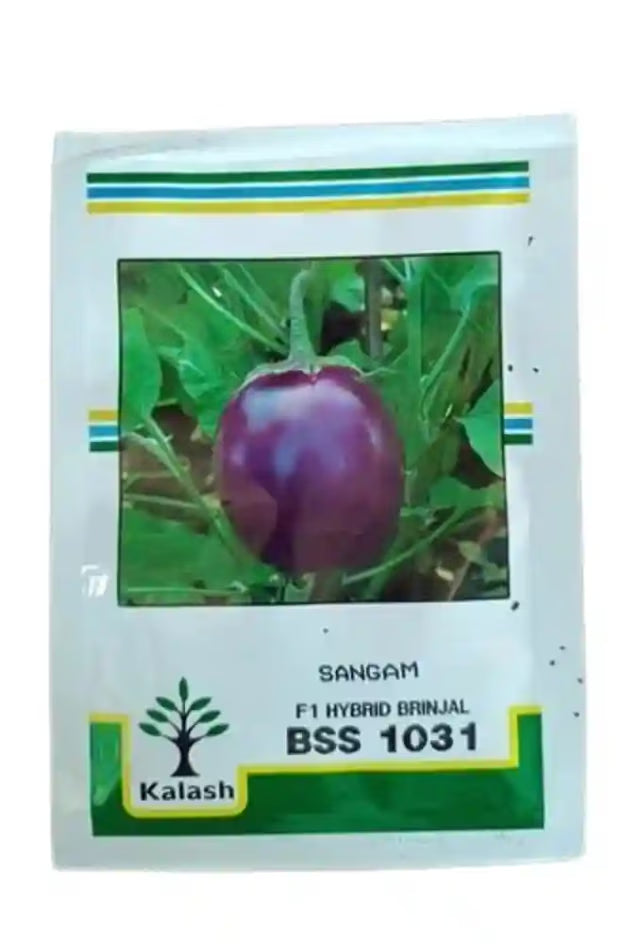
Kalash BSS 1031 Sangam Brinjal F1 Hybrid Seeds are specially
developed for strong crop growth and reliable performance under different
environmental conditions. This hybrid variety is
heat tolerant and suitable for multiple growing seasons,
making it an excellent choice for commercial cultivation.
These seeds produce oval-shaped, bright purple fruits
weighing approximately 250–300 grams. With resistance to
Bacterial Wilt disease and strong plant vigor,
Kalash Sangam Brinjal provides multiple harvests and high yield potential
throughout the growing period.
🌱 Product Specifications
Specification
Details
Product Name
Kalash 1031 Sangam Brinjal Hybrid Seeds
Brand Name
Kalash Seeds
Other Name
Baingan ke Beej
Crop Type
F1 Hybrid
Fruit Shape
Oval
Fruit Weight
250 – 300 gm
Fruit Color
Bright Purple
First Harvest
60 – 65 Days After Transplanting
Disease Resistance
Tolerance to Bacterial Wilt
⭐ Key Features & Benefits
✅ Disease Tolerance: Shows tolerance to Bacterial Wilt disease.
✅ Heat Tolerant Variety: Performs well under high temperature conditions.
✅ High Yield Potential: Produces multiple harvests in a year.
✅ Large Fruit Size: Produces 250–300 gm oval fruits.
✅ Strong Plant Growth: Supports healthy and vigorous crop development.
✅ Easy to Grow: Suitable for both experienced and beginner farmers.
🌾 Crop Requirements
Requirement
Details
Season
Kharif: May – June
Rabi: September – October
Summer: January – February
Seed Rate
700 – 800 gm per Acre
Spacing
75 cm × 60 cm
Soil Type
Well-drained, Fertile Sandy Loam Soil
Soil pH
5.5 – 6.8 pH
Sunlight Requirement
6 – 8 Hours Daily
Temperature
21°C – 29°C
Water Requirement
Regular Irrigation
Fertilizer
Balanced Fertilizer
🌱 Sowing Tips
🌿 Soak seeds in water before sowing to improve germination.
🌱 Sow seeds at proper depth and cover with soil.
☀️ Provide 6–8 hours of sunlight daily.
💧 Water regularly for healthy plant growth.
🌾 Apply fertilizers at recommended intervals.
📌 Important Note
Crop yield and performance may vary depending on soil fertility,
climate conditions, irrigation practices, and crop management methods.